Paper manufacturing runs in a continuous, high-stakes environment. You cannot afford minor speed discrepancies. Even a tiny mismatch between rollers causes catastrophic paper web breaks. These sudden breaks trigger hours of costly downtime. Modern mills simply cannot rely on legacy mechanical throttling to maintain stability.
Plant engineers and procurement managers face intense pressure. You must evaluate drive upgrades carefully. Your primary goal is improving Overall Equipment Effectiveness (OEE). You also need tight process controllability across massive, multi-stage production lines. Selecting the wrong drive technology leads to wasted capital and ongoing maintenance nightmares.
This article provides an evidence-based framework for your facility. We will explore how to specify, select, and implement the correct drive topology. You will learn actionable strategies to optimize multi-stage paper machine applications. By following these guidelines, you can significantly reduce material waste and protect your delicate equipment from mechanical stress.
Key Takeaways
Process Controllability: Continuous cascaded synchronization prevents paper web tearing during transitions between the wet end, press, and drying sections.
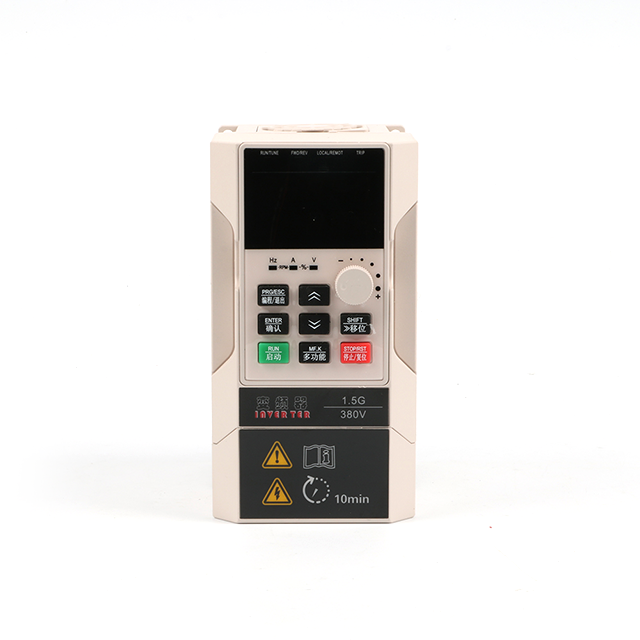
Strategic Selection: Auxiliary systems are highly cost-effective with an economy vector frequency converter, while main drives require the precision of a general vector frequency converter.
Risk Mitigation: Proper implementation requires sizing by Full Load Amps (FLA), addressing Total Harmonic Distortion (THD), and specifying correct enclosure ratings for high-moisture mill environments.
TCO Focus: Lifecycle ROI is driven more by reduced mechanical wear and minimized downtime than by raw energy savings alone.
The Production Impact of Precise Speed Control in Paper Mills
Framing the Business Problem
Energy savings remain a baseline expectation for any facility upgrade. However, the primary financial driver in paper production is completely different. Your main goal is eliminating web breaks. You must reduce material waste to maintain profitability. Every time a continuous sheet tears, production stops entirely. Operators must re-thread the machine. This process wastes tons of pulp and consumes hours of labor. Precise electrical regulation directly prevents these catastrophic tearing events.
Cascaded Speed Coordination
Paper machines require progressive speed adjustments. We call this cascaded speed coordination. The paper sheet stretches and shrinks as it moves down the line. Traction and tension must dynamically match across multi-motor continuous lines. The forming fabrics operate wet and delicate. The drying cylinders apply heat and reduce moisture. Finally, the winders pull the finished product tightly. If the winder pulls just one percent faster than the dryer, the paper snaps. You need a dedicated Frequency Converter system to orchestrate these complex transitions seamlessly.
Evaluating Success Criteria
Do not define success just by utility bill cutbacks. You should measure measurable improvements in throughput consistency. Track your reduction in defect rates carefully. A successful drive implementation stabilizes your entire process. Operators spend less time troubleshooting faults. Your final paper rolls maintain uniform thickness and quality. Ultimately, precise digital coordination transforms a volatile production line into a predictable asset.
Selecting the Right Frequency Converter: Economy vs. General Vector
Solution Categorization
Mills contain dozens of different motor applications. You must map specific drive types to appropriate applications. This strategic mapping optimizes your capital expenditure. Buying overly complex drives for simple pumps wastes money. Conversely, buying cheap drives for precision winders ruins product quality. You must categorize your loads into auxiliary systems and core production machines.
Auxiliary Applications
Paper mills rely heavily on supporting fluid systems. These include boiler feed pumps, chemical mixing vats, and large exhaust fans. These applications represent variable-torque loads. They do not require microscopic precision. An Economy Vector Frequency Converter serves as the ideal, cost-effective choice here. It reduces pump speed during low-demand periods. This saves massive amounts of energy. You avoid the high cost of premium models while still gaining excellent operational flexibility.
Core Production Applications
Main paper machine rollers and tensioning winders demand extreme accuracy. You must specify a General Vector Frequency Converter for these critical stages. These high-tier units utilize sensorless vector control algorithms. They calculate motor magnetic flux mathematically. They deliver precise torque regulation instantly. They respond to sudden load changes without relying on expensive, fragile encoder feedback.
Drive Application Mapping Chart
Application Category | Equipment Examples | Load Characteristics | Recommended Drive Topology | Primary Benefit |
Auxiliary Fluid Control | Cooling pumps, exhaust fans | Variable Torque | Economy Vector | High energy savings, low initial cost |
Material Preparation | Pulp mixers, agitators | Constant Torque | Economy Vector | Reliable mixing, mechanical protection |
Main Machine Drive | Forming fabrics, press rolls | High Precision Tension | General Vector | Instant response, synchronized speed |
Finishing | Winders, slitters | Extreme Precision & Torque | General Vector | Tear prevention, flawless rolling |
Overcoming Mechanical Stress with Soft Start and Synchronization
Starting a paper machine is a delicate operation. Uncontrolled acceleration destroys wet-web paper instantly. Fragile fibers cannot withstand sudden jerks. Controlled acceleration, or soft starting, solves this problem. The drive slowly ramps up the voltage and frequency. The motor gently begins turning the massive rollers. This smooth transition protects the delicate media. It allows operators to safely transition the line from a dead stop to full production speed without causing defects.
Extending Equipment Lifespan
Legacy mechanical throttling causes brutal wear and tear. Across-the-line starting slams equipment with full power immediately. This practice delivers severe mechanical shocks to belts, gears, and bearings. Modern frequency regulation eliminates this violence entirely. By easing the motor into motion, you extend the lifespan of your mechanical infrastructure significantly. Maintenance teams spend less time replacing shattered couplings and burnt-out contactors.
Multi-Motor Synchronization
Paper machines contain dozens of independent drive sections. These sections must act as one unified machine. Drive-to-drive communication ensures complex production stages remain perfectly aligned. We strongly recommend evaluating the communication protocols of your drives.
Consider these synchronization best practices:
Use industrial Ethernet protocols to link all drives to a central PLC.
Establish one master drive to dictate the line's baseline speed.
Configure subsequent drives as followers with specific speed ratios.
Program fault-linkage so that if one drive trips, the entire line halts safely.
This digital networking eliminates the dangerous lag inherent in legacy analog control systems.
Implementation Risks: Environmental Protection and Electrical Integrity
Operating Environment Constraints
Paper mills feature brutal operating environments. High humidity constantly saturates the air. Corrosive chemicals float through the facility. Ambient temperatures near the drying sections frequently exceed normal operating limits. You must address these realities during the specification phase. Standard vented enclosures will fail quickly here. Specify the necessity of NEMA 4X or IP66 rated enclosures. If you use centralized electrical rooms, ensure you install environmentally sealed, custom-cooled control panels.
The Sizing Trap
Many engineers fall into a dangerous sizing trap. They size a drive solely by motor horsepower (HP). This common engineering mistake leads to catastrophic failures. Horsepower is merely a mechanical output rating. It does not reflect the actual electrical current required under heavy loads.
You must specify based on motor Full Load Amps (FLA). Older motors or specialized high-torque motors often draw significantly more amperage than standard models of the same HP. Sizing by FLA ensures reliable operation under peak torque demands. It prevents nuisance tripping when the machine encounters a heavy pulp lump.
Harmonic Mitigation (Compliance)
Digital switching technology introduces specific electrical risks. Pulse Width Modulation (PWM) generates electrical noise. It creates harmonics that flow back into your factory's power grid. These harmonics easily disrupt sensitive microprocessors and PLCs nearby. They can also overheat surrounding transformers.
You must outline a harmonic mitigation strategy. We recommend installing isolation transformers or line reactors. A simple 3% to 5% input line reactor smooths out the current waveforms. This affordable component maintains Total Harmonic Distortion (THD) below stringent IEEE 519 standards. Proper harmonic mitigation protects your entire plant's electrical integrity.
Calculating Lifecycle ROI and Shortlisting Next Steps
Economic Modeling
The initial purchase price of a drive often represents less than 10% of its lifecycle cost. You must look beyond the sticker price. Provide a framework for calculating Simple Payback and Net Present Value (NPV).
Your economic model must factor in several critical variables. First, calculate the mechanical depreciation avoidance. Soft starting saves thousands of dollars in replacement belts and bearings. Second, factor in electrical utility rebates. Many local utilities pay facilities to upgrade inefficient pumps. Finally, quantify the value of recovered downtime. If precise control prevents just two web breaks a month, the system often pays for itself rapidly.
Shortlisting Criteria
Procurement teams need clear next-step actions. Before signing any purchase orders, you must verify technical compatibility.
Verify Auto-Tune Capabilities: Ensure the drive can automatically map the electrical characteristics of your existing induction motors.
Check Bypass Panels: Ensure bypass panels are included for critical continuous-run pumps. If a drive fails, the bypass panel keeps the pump running at full speed.
Confirm Communication Modules: Verify the unit supports the specific industrial protocol your plant utilizes.
Review Warranty Terms: Confirm the manufacturer provides extended coverage for harsh-environment installations.
Conclusion
The transition from legacy mechanical control to digital frequency regulation represents a major leap forward. It remains a strict necessity for modern quality control, not just basic energy compliance. Without precise electrical regulation, paper mills simply cannot compete in today's market. You must eliminate the volatility caused by manual throttling.
Matching the specific converter tier to the application footprint serves as the master key to maximizing your ROI. Use economy models for basic fluid management. Deploy advanced vector units for your highly sensitive tensioning winders. This balanced approach protects your capital budget.
We advise all readers to conduct a comprehensive motor audit immediately. Review your motor nameplates. Document every FLA rating and environmental constraint. Gather this crucial data before you contact a system integrator or OEM. Careful preparation guarantees a flawless, profitable installation.
FAQ
Q: Why must a frequency converter be sized by Full Load Amps (FLA) rather than Horsepower (HP)?
A: Horsepower measures mechanical output, but the drive supplies electrical current. Different motors with the exact same HP rating can require vastly different amounts of current to operate, especially older or specialized industrial motors. Sizing strictly by FLA ensures the drive can handle peak current demands without nuisance tripping or overheating during heavy loads.
Q: Can a general vector frequency converter replace a servo drive in paper winding applications?
A: Yes, in many cases. Modern sensorless vector algorithms calculate rotor position and magnetic flux mathematically. This provides near-servo precision for torque and speed regulation. It allows mills to achieve extreme accuracy on winders while avoiding the high costs and wiring complexity associated with traditional servo motors and physical encoders.
Q: How do you prevent motor overheating when running a paper machine at very low speeds?
A: Standard motors cool themselves using an internal fan attached to the rotor. At low speeds, this fan barely moves any air. To prevent overheating, you must either de-rate the motor, specify an inverter-duty motor, or install an external forced-ventilation blower that runs continuously regardless of the main motor's speed.
Q: What is the function of a bypass panel in a paper mill's pumping system?
A: A bypass panel acts as an emergency fail-safe. If the main drive fails or requires scheduled maintenance, the bypass panel routes utility power directly to the motor. This forces the pump to run at full speed across-the-line. It prevents catastrophic plant shutdowns by keeping critical fluid systems, like boiler feed pumps, operational.


