

Views: 0 Author: Site Editor Publish Time: 2026-05-11 Origin: Site


Energy costs typically represent the largest controllable operational expense in modern wastewater treatment plants (WWTPs). Pumping stations and aeration basins consume the vast majority of this electrical power. Many facilities still struggle with legacy infrastructure bottlenecks. They operate constant-speed pumps paired with outdated mechanical throttling. Operators actively restrict flow using physical valves while motors run at maximum capacity. This outdated methodology leads to excessive energy waste. It causes severe mechanical wear and triggers costly peak-demand utility penalties.
You need a smarter control method to bridge the gap between fluctuating inflow demands and rigid motor output. Upgrading your systems provides a mathematically proven pathway to reduce specific energy consumption. Tracking kilowatt-hours per million gallons (kWh/MG) reveals massive efficiency gaps in legacy plants. Integrating Variable Frequency Drives offers an immediate solution to these challenges. They dynamically match power draw to exact process requirements. You can finally stabilize complex process controls while maintaining strict environmental compliance targets.
Exponential Energy Savings: Applying the Affinity Laws, reducing pump motor speed by just 20% can yield up to a 50% reduction in energy consumption.
Process Optimization: Beyond energy, VFDs enable advanced features like automated "de-ragging" and dissolved oxygen (DO) pacing for aeration.
Asset Protection: Soft-start and soft-stop capabilities eliminate water hammer, reducing mechanical stress on valves, pipes, and motors.
Calculated Deployment: ROI depends on proper application; VFDs must be mapped to system curves, avoiding high-static-head or low-run-hour misapplications.
Operators historically controlled fluid flow by running pump motors at 100 percent capacity continuously. They used physical throttling valves to choke the output back to desired levels. Think of this as driving a car with the accelerator pressed fully to the floor while regulating your speed with the brake pedal. This mechanical throttling wastes immense amounts of electrical energy. Modern electronic drives solve this fundamental inefficiency. They electronically alter the voltage and frequency supplied to the motor. You can precisely match motor output speed to actual real-time fluid demand.
The relationship between motor speed and energy consumption remains non-linear. The principles of fluid dynamics govern this relationship through the Affinity Laws. Power consumption varies with the cube of the pump speed. Aligning your pump speed with off-peak flow rates prevents massive energy bleed. A minor reduction in operational speed translates to massive power conservation.
Motor Speed Reduction |
Operating Speed (%) |
Resulting Flow Rate (%) |
Power Required (%) |
Total Energy Saved (%) |
|---|---|---|---|---|
Baseline |
100% |
100% |
100% |
0% |
-10% |
90% |
90% |
73% |
27% |
-20% |
80% |
80% |
51% |
49% |
-30% |
70% |
70% |
34% |
66% |
Beyond baseline energy reduction, these devices excel at demand charge mitigation. Heavy industrial motors require massive power surges during startup. This inrush current triggers peak kilowatt demand penalties from utility providers. Electronic drives act as advanced reduced-voltage starters. They slowly ramp up the motor speed, keeping current draw low. Lowering your peak kilowatt demand directly reduces monthly utility demand charges. This peak shaving capability also allows facilities to safely downsize backup generator requirements.
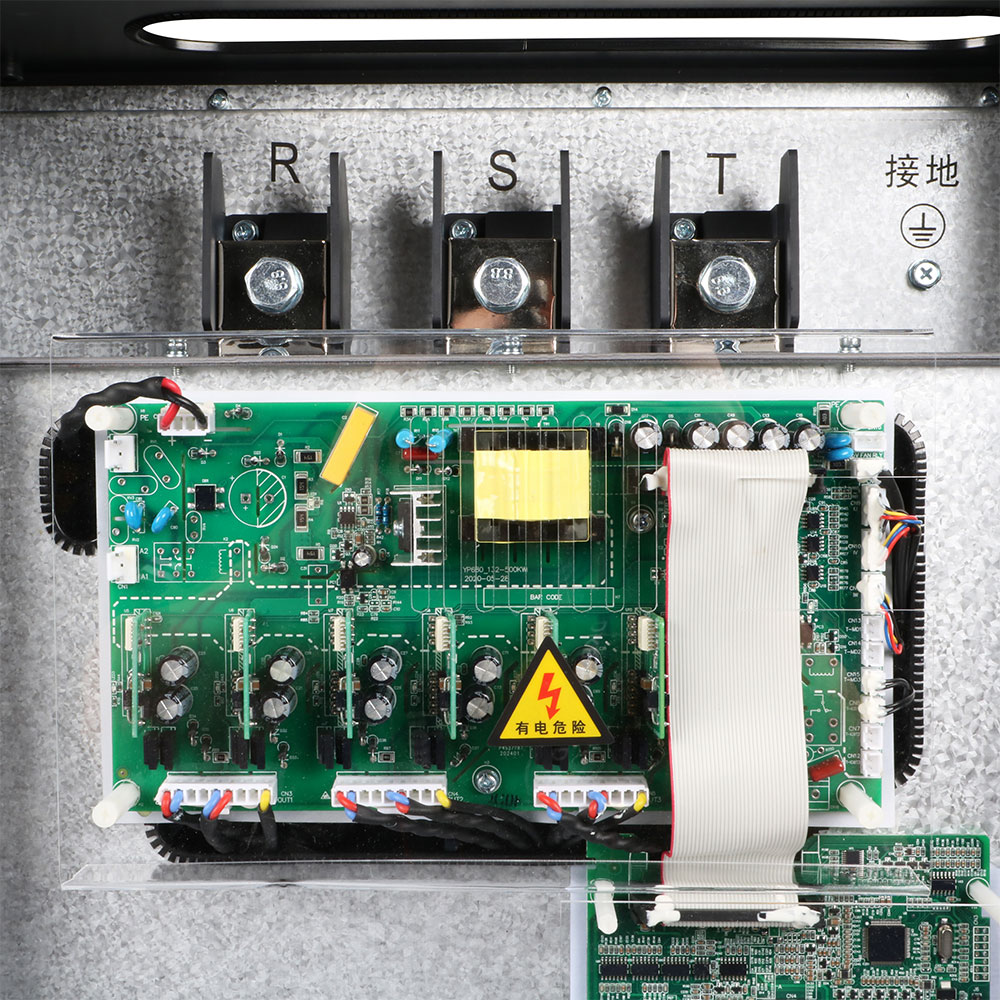
Aeration systems generally consume between 40 and 60 percent of a treatment plant's total energy. Biological nutrient removal requires precise oxygen levels. Constant-speed blowers frequently over-aerate basins, wasting enormous amounts of power. You can integrate advanced drives directly with SCADA systems and Dissolved Oxygen (DO) sensors. This integration creates a highly responsive closed-loop control system. The system speeds up blowers during high organic loading. It slows them down during nighttime low-flow periods. You avoid costly over-aeration while maintaining strict environmental compliance targets effortlessly.
Lift stations face severe operational volatility due to Inflow and Infiltration (I&I). Heavy rainfall events send sudden surges of water through municipal pipes. Legacy lift stations cycle constant-speed pumps violently on and off to handle these surges. Electronic drives allow lift stations to adapt continuously. The pumps adjust their speed dynamically to match the incoming flow perfectly. Operators can also program specific ramp-up flushing sequences. Periodic high-velocity bursts prevent harmful solid sedimentation from accumulating in the force mains.
Facility engineers must evaluate drive types carefully for proper equipment matching. Different treatment processes require entirely different torque profiles. Highly dynamic, heavy-load processes like sludge thickening require precise torque control. A General Vector Frequency Converter delivers this exact precision under rapid load changes. Simpler applications include low-horsepower auxiliary blowers, chemical dosing units, or clear water transfer pumps. For these basic tasks, an Economy Vector Frequency Converter accelerates your ROI. It provides excellent operational efficiency without sacrificing long-term reliability.
Fibrous materials and flushable wipes create an ongoing crisis in municipal wastewater networks. These solids quickly bind together and clog pump impellers. Removing these blockages requires dangerous and expensive manual labor. Modern drives offer automated de-ragging protocols to combat this issue. Smart programming detects torque spikes associated with a developing clog. The drive temporarily reverses the pump direction or rapidly alters its speed profile. This fluid turbulence unwinds the fibrous debris and clears the impeller automatically. Automated de-ragging prevents extensive manual maintenance and unexpected facility downtime.
Mechanical stress reduction represents another massive operational advantage. Traditional direct-on-line (DOL) motor starts generate destructive physical forces. The sudden acceleration of water causes severe water hammer across the piping network.
Valve Protection: Smooth electrical ramping prevents check valves from slamming shut violently.
Seal Preservation: Gradual torque application prevents mechanical seal failure on heavy centrifugal pumps.
Pipe Integrity: Eliminating pressure spikes protects aging municipal pipe joints from catastrophic bursts.
Running pumps closer to their Best Efficiency Point (BEP) minimizes cavitation risks. Cavitation occurs when pressure drops cause fluid to vaporize and collapse aggressively against metal surfaces. Precise speed control keeps the pump in its ideal operating zone. You eliminate destructive vibration and significantly lower ambient facility noise. This creates a safer, more reliable operating environment for your maintenance personnel.
A credible facility evaluation requires acknowledging where this technology fails to fit. Systems dominated by high static head pose a significant engineering limitation. Static head refers to the physical elevation change the pump must overcome. In these applications, elevation dictates the required energy much more than pipe friction. Slowing the pump speed in a high-static system often results in zero actual fluid flow. The pump simply spins water in place. This condition, known as deadheading, wastes electrical energy entirely and damages the pump casing.
You must rigorously observe minimum run-time thresholds before approving capital expenditures. Avoid deploying electronic drives on backup pumps or storm-water pumps operating fewer than 2,000 hours annually. The initial hardware and installation costs will easily outpace the resulting energy savings over the equipment's lifespan. Focus your modernization budget exclusively on continuous-duty process equipment.
Engineers must consider facility electrical topographies carefully. Drives inherently introduce harmonic distortion back into the plant grid. High-frequency electrical noise interferes with sensitive electronics. You must install dedicated input line reactors, output reactors, or active harmonic filters. Proper filtering protects sensitive SCADA equipment and programmable logic controllers (PLCs). Your installation must meet strict IEEE 519 standards for power quality and harmonic control.
Retrofitting modern drives onto legacy standard motors carries significant compatibility risks. Older motor windings lack the robust insulation required for variable frequency operation. The drive's pulse-width modulation creates rapid voltage spikes. Furthermore, standard motors rely on shaft-mounted fans for cooling. Running these motors at low speeds eliminates necessary airflow, causing rapid overheating. You strictly require inverter-duty, NEMA Premium rated motors for safe, long-term compatibility.
Successful deployment requires a highly structured engineering approach. You cannot simply install new hardware and expect immediate optimization. Facility managers must build a rigorous procurement framework.
Establishing the Baseline: Mandate a comprehensive pre-installation energy audit. Establish a firm baseline using specific energy consumption metrics. Track your actual kWh per Million Gallons treated for at least one month. Use these figures to build an accurate Before/After performance model.
System Curve Analysis: Analyze your specific pump curve against the dynamic system curve. Ensure the planned operating range aligns perfectly. The pump must remain within 10 percent of its Best Efficiency Point during normal daily operation.
Utility Rebates and Grants: Explore municipal or federal energy efficiency incentives proactively. Local utility companies frequently subsidize the initial hardware integration. They reward verifiable kilowatt reduction. These energy grants can shorten your payback period to well under 24 months.
Vendor Evaluation Criteria: Shortlist hardware suppliers based on deep integration capabilities. Demand turnkey control panel building. Verify native SCADA communication compatibility using Modbus, EtherNet/IP, or Profinet protocols. Require comprehensive post-installation operator training and guaranteed regional technical support.
Transitioning from reactive pump operation to predictive, demand-based control requires strategic facility investment. Upgrading legacy flow control systems fundamentally modernizes your wastewater infrastructure.
The exponential energy savings generated via the Affinity Laws easily justify the initial capital expenditure.
Advanced control logic allows lift stations and aeration basins to respond perfectly to fluctuating conditions.
Extended asset life, mitigated water hammer, and automated maintenance reductions make this technology indispensable.
Facility leaders must audit their highest-consuming aeration blowers and lift station pumps immediately. Partner with experienced integration engineers. Map your existing system curves accurately. By taking decisive action now, you secure long-term operational resilience and dramatic energy reductions for your municipality.
A: The typical ROI ranges from one to three years. This timeframe depends heavily on local utility rates, annual run hours, and accurate equipment sizing. Securing municipal energy rebates can significantly accelerate this payback period. High-usage aeration blowers usually yield the fastest financial returns.
A: They highly mitigate clogging through automated de-ragging features. Smart drives sense torque spikes and reverse pump direction to clear fibrous debris. However, they remain a supplement to proper headworks screening. You still need correct impeller selection to handle heavy solids effectively.
A: You must ensure your existing motors are inverter-duty rated. Standard legacy motors often suffer rapid insulation failure from electrical voltage spikes. They also experience inadequate cooling when running at lower operating speeds. Replacing legacy standard motors with NEMA Premium inverter-duty models prevents catastrophic overheating.
A: They drastically reduce starting inrush current. Acting as intelligent soft starters, they eliminate massive electrical power spikes during motor startup. This reduction safely allows facilities to specify smaller, far less expensive backup generators for emergency power continuity.


