Global electric motor systems account for nearly 40% of industrial electricity consumption. Selecting the right motor control is not just a standard engineering decision. It acts as a major operational expenditure and capital expenditure driver for your facility. Engineers and procurement teams often default to Variable Frequency Drives for modern applications. However, using a VFD for a constant-speed application introduces unnecessary heat, harmonic distortion, and hidden maintenance costs. You need a better way to assess your equipment needs. This guide strips away the marketing jargon to compare fundamental mechanics, lifecycle expenses, and implementation realities. We provide a concrete framework for decision-stage evaluation between these two dominant technologies. A reliable Soft Starter often outperforms complex drives in fixed-speed roles. Understanding this critical difference will safeguard your budgets and extend your equipment lifespans.
Key Takeaways
Speed Control vs. Torque Management: VFDs offer continuous speed control throughout the operational cycle; soft starters manage voltage exclusively during the start/stop phases to prevent mechanical shock and inrush current.
The Hidden Energy Trap: Even high-efficiency VFDs experience ~3% energy loss as heat. In fixed-speed applications, a properly configured soft starter is highly efficient (often 99.5%+).
Space and Maintenance: Soft starters boast a significantly smaller footprint and longer Mean Time Between Failures (MTBF)—often 20 to 30 years—due to fewer active components. VFDs typically require capacitor and fan replacements by year three.
Utility Demand Charges: Facility utility structures (penalties for peak inrush current) heavily influence the ROI of both technologies.
Core Mechanics: How They Solve Motor Starting Challenges
The Soft Starter Mechanism (Voltage Regulation)
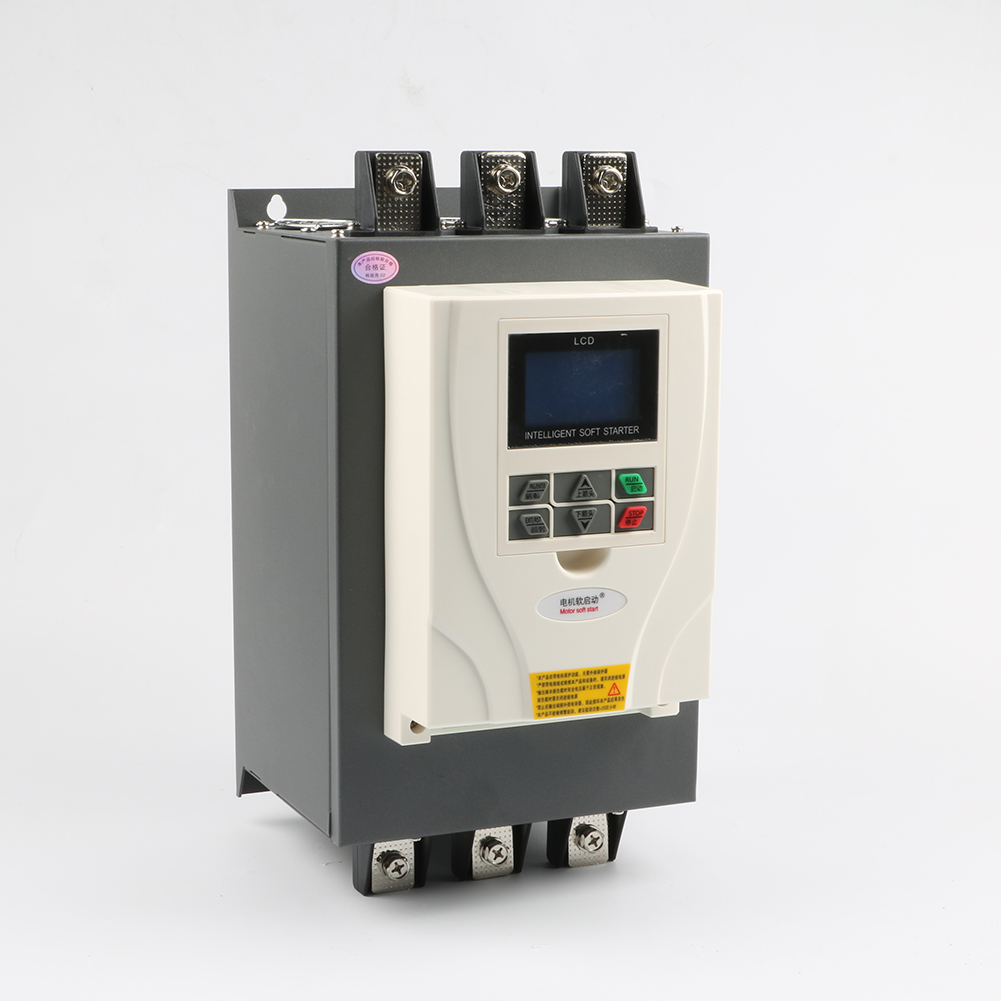
How do they actually manage power? They utilize Silicon Controlled Rectifiers (SCRs) or thyristors to regulate the energy. These solid-state devices act as electronic valves. They chop the incoming AC voltage waveform, delaying the firing angle to restrict power. This action gradually ramps up voltage to the motor over a set time. You typically program this ramp profile between 2 and 5 seconds. Controlling the initial voltage restricts the massive inrush current from the grid. It also limits brutal mechanical wear on drive belts and gearbox assemblies. You easily mitigate fluid pressure surges, commonly known as water hammer, in municipal piping systems.
Configuration Note: Pay close attention to internal routing. Once the motor reaches its full operational speed, a Bypass Soft Starter closes an internal mechanical contactor. This physically pulls the SCRs out of the active circuit. It completely eliminates heat generation and maximizes efficiency well past 99.5%. Conversely, an Online Soft Starter keeps the SCRs in the circuit continuously. You must implement much more robust thermal management and cabinet ventilation to handle the ongoing heat dissipation.
The VFD Mechanism (Frequency and Voltage Regulation)
Variable frequency drives take a completely different technical approach. They dictate motor speed directly by altering the power frequency. They achieve this via a three-step power conversion process:
Rectifier: Converts incoming AC grid power into raw DC power.
DC Filter/Bus: Uses capacitors and chokes to smooth the direct current.
Inverter: Converts DC back to AC using rapid Pulse Width Modulation (PWM).
You calculate the resulting speed using the standard industry formula: N = 120 x F / P. Here, speed (N) equals 120 multiplied by the frequency (F), divided by the motor's number of poles (P). This dynamic conversion provides full holding torque even at zero speed. It gives you continuous, precise dynamic response for complex industrial loads.
The 5-Dimension Technical and Commercial Evaluation
1. Energy Efficiency & Thermal Output
Drives excel wildly in variable torque applications like water pumps and cooling fans. They leverage the Affinity Laws for massive power reductions. According to these physics laws, reducing operational speed by 50% drops power consumption to just one-eighth of the maximum. However, they suffer greatly in constant-speed scenarios. Running a drive at a constant 100% speed creates a permanent 2% to 3% energy tax. The inverter constantly loses this electrical energy as heat.
Solid-state starters produce minimal heat once they hit full speed. Bypass models excel particularly well here. They completely prevent the permanent energy tax seen in constant-speed drive operation, saving thousands in annual cooling costs.
2. Initial Cost vs. Lifecycle Maintenance
Capital allocation matters greatly during facility upgrades. Drive initial capital costs generally sit two to three times higher than equivalent starter models. We must look at the long-term maintenance reality. Solid-state starters rely on highly durable components. They prove incredibly resilient and often last over 20 years in harsh factory conditions. Drives demand strict preventative maintenance schedules. You often need to replace localized cooling fans, deionizing filters, and DC bus capacitors within the first 3 to 5 years.
Physical cabinet space carries a massive premium on crowded factory floors. Starters remain incredibly compact. You can easily mount them on DIN-rails or directly onto panels. Drives require substantially larger standalone cabinets. You need extra physical volume to house internal rectifiers and heavy filters. They also demand generous spatial clearances for necessary cooling and ventilation airflow.
4. Harmonics and Power Quality (EMC)
High-frequency PWM switching inside drives introduces severe harmonic distortion. This dirty power degrades local facility transformers and triggers sensor faults. You often must add expensive line reactors or external harmonic filters to protect the grid. Starters generate practically zero harmonics while running at full speed. You avoid complex electromagnetic compatibility (EMC) mitigation strategies entirely.
5. Wiring and Retrofitting Capabilities
Flexibility during installation drives project timelines. Starters allow for Wye-Delta (Inside-the-Delta) wiring configurations. You can use a smaller-rated controller to start a significantly larger motor. This unique wiring strategy saves substantial material costs. Drives strictly require sizing to the full-load motor current. They offer far less flexibility for budget-conscious brownfield retrofits.
Comparison Chart: Decision Matrix Summary
Evaluation Dimension | Soft Starter | Variable Frequency Drive (VFD) |
Efficiency at 100% Speed | Extremely High (99.5%+) | Lower (~97%, losing 3% to heat) |
Lifecycle Maintenance | Low (Solid-state, 20+ year MTBF) | High (Capacitor/fan replacement required) |
Physical Footprint | Compact, DIN-rail friendly | Large, requires generous cooling space |
Harmonic Distortion | Effectively Zero at full speed | High, requires mitigation equipment |
Initial Capital Cost | Low | High (2x to 3x higher) |
Scenario-Based Decision Framework
When to Specify a Soft Starter
Look closely at the load profile. Use them for constant speed and high inertia loads. Good examples include heavy conveyor belts, industrial centrifuges, standard compressors, and positive displacement pumps. Their operational speed does not fluctuate during normal production cycles. Heavy industrial setups benefit greatly here. You might utilize a High Voltage Stationary Solid Soft Starter for multi-megawatt motors. This helps facilities strictly adhere to utility grid inrush limitations. You achieve this vital grid compliance without the massive footprint of a medium-voltage drive. Finally, consider space-constrained brownfield retrofits. Upgrading old motor control centers often reveals severe limits on cooling capability. Solid-state devices fit these tight constraints perfectly.
When to Specify a VFD
Select variable drives for fluctuating demand applications. Wastewater treatment pumps need continuous flow adjustment. Variable Air Volume (VAV) HVAC fans change speeds constantly based on building temperatures. Processes with shifting pressure targets require dynamic control. They also dominate precise position tasks. Applications requiring full holding torque at zero speed demand a drive. Hoists, elevators, and industrial cranes fall strictly into this category. You also need them in absolute "zero inrush" utility environments. Some facilities face extremely aggressive peak demand charges from utility companies. Even a mitigated starter inrush of 300% to 400% triggers financial penalties. Drives provide the only true zero inrush solution.
Implementation Realities and Hidden Risks
Engineers encounter several electrical pitfalls during field installation. You must navigate these technical risks carefully to ensure system longevity.
Beware of Cheap "Two-Phase" Soft Starters: Budget models sometimes only control two of the three electrical phases. This cost-cutting measure creates severe current imbalance during acceleration. It directly increases your motor winding failure risk. Always specify 6-SCR control architectures. This ensures true three-phase regulation and perfectly balanced thermal loads.
Reflected Wave Phenomena with VFDs: Plant layouts often separate heavy motors from safe control rooms. Installing drives with long cable runs causes dangerous voltage spikes. We call this reflected wave phenomena. These high-voltage spikes quickly degrade standard motor insulation. Mitigation requires specific hardware planning. You must install inverter-duty motors and proper dV/dt filters to protect the system.
Bearing Degradation: Drives alter the AC frequency rapidly. This rapid switching induces stray shaft voltages. These transient voltages discharge aggressively through the motor bearings, causing physical fluting and premature mechanical failure. Specify shaft grounding rings for all drive installations. AEGIS rings provide excellent protection here. Solid-state starters never alter the AC frequency. Therefore, they completely avoid this expensive bearing degradation issue.
Conclusion
Do not over-engineer the electrical solution. Analyze the actual operational cycle before writing the specification. If the process requires varying the motor speed during production, a VFD remains mandatory. It will easily pay for itself via substantial energy savings. If the motor merely needs a smooth start and runs at continuous full speed, pivot your strategy immediately. A solid-state starter provides superior mechanical reliability and lower upfront cost. It delivers higher operational efficiency and eliminates harmonic headaches. Stop paying the permanent energy tax on constant-speed applications.
Take these action-oriented next steps before your next procurement cycle:
Audit the facility’s utility bills to identify hidden peak demand charges.
Measure all available cabinet dimensions and verify thermal limits for the installation area.
Consult an automation engineer to analyze exact mechanical load profiles.
Review existing motor insulation ratings to gauge compatibility.
Map out exact cable run distances between control panels and field machinery.
FAQ
Q: Do I need a soft starter if I already have a VFD?
A: Generally, no. A VFD inherently soft-starts the motor by gradually ramping up the frequency from zero. However, extreme edge cases exist. If one large drive controls multiple motors via a complex bus, individual motor protection might involve overlapping starter technologies to isolate faults.
Q: Can a VFD be swapped for a soft starter later?
A: Yes, you can swap them electrically. However, the physical integration presents major hurdles. Replacing a compact starter with a VFD requires significantly more panel space. You also need upgraded cooling systems and potentially specialized shielded motor cables to handle new harmonic interference.
Q: Are soft starters considered energy-saving devices?
A: Not directly in the way variable drives are. They save money by drastically reducing mechanical wear on belts and gears. They also help facilities avoid severe utility peak demand penalties during startup. However, they do not alter the continuous operational energy consumption of the running motor.


